This article was co-written by Tina Kandelaki and Anastasiia Nazarenko, Palin Communications
Healthcare communications has a peculiar problem: the more important the message, the more carefully it is often expressed. And the more carefully it is expressed, the easier it can become to ignore.
In an era where AI can generate endless polished content, sameness is becoming one of the biggest threats to memorability.
For healthcare communications, regulation, compliance and risk sensitivity are always top of mind. But sometimes, these processes that are there to minimise risks can also sometimes flatten campaign elements that help earn human attention.
At the same time audiences are more overwhelmed than ever. We are operating in an environment shaped by information overload, crisis fatigue and constant competition for attention – not only with other health messages, but entertainment, culture and breaking news. Simply “important” messages no longer automatically cut through just because they are important.
Responsible doesn’t have to mean predictable
This was one of the key ideas that stayed with us after attending Cairns Crocodiles earlier this year, particularly Amy Kean’s session on “weirdism” and the broader industry conversation around distinctiveness. While healthcare communications operates within a very different set of boundaries to consumer marketing, the underlying challenge still applies: if everything feels polished, careful and expected, what actually gets remembered?
The choice is not between being responsible or being noticed. The stakes in healthcare are too high for being irresponsible. It is between communication that merely ticks all the boxes and one that finds a more human, relevant and memorable way to work within them. Some of the most effective health campaigns are not necessarily the most controversial. What makes them memorable is often something more human: a strong insight, a story that creates emotional connection, a culturally relevant tension, or a framing that helps audiences see a health issue differently.
Creativity begins with understanding the behaviour
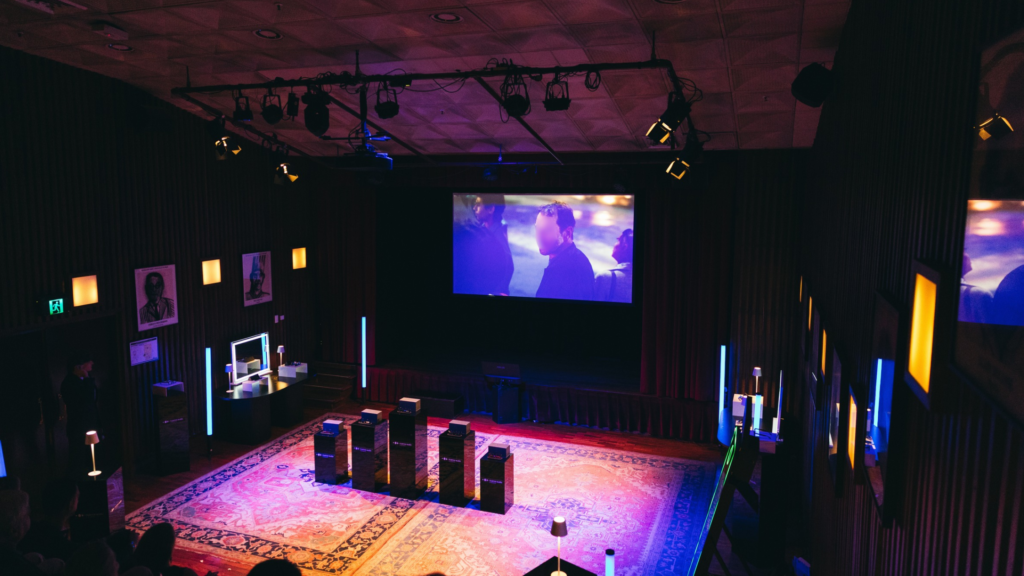
mycar Tyre & Auto’s recent Sunburnt Car campaign is a strong example of this. Rather than repeating the familiar warning that UV exposure is dangerous, the campaign identified a contradiction in Australians’ behaviour: many people think about sun protection at the beach, but not while sitting in a car. It transformed that overlooked risk into something physical, upholstering a vehicle in synthetic skin that visibly reacted to UV exposure.
What made the idea distinctive was not provocation for its own sake. Sure, it was strange enough to command attention, but its creativity remained grounded in research, clinical input, lived experience and a practical action people could take. Its distinctiveness came from finding the everyday moment in which the health message had been missed.
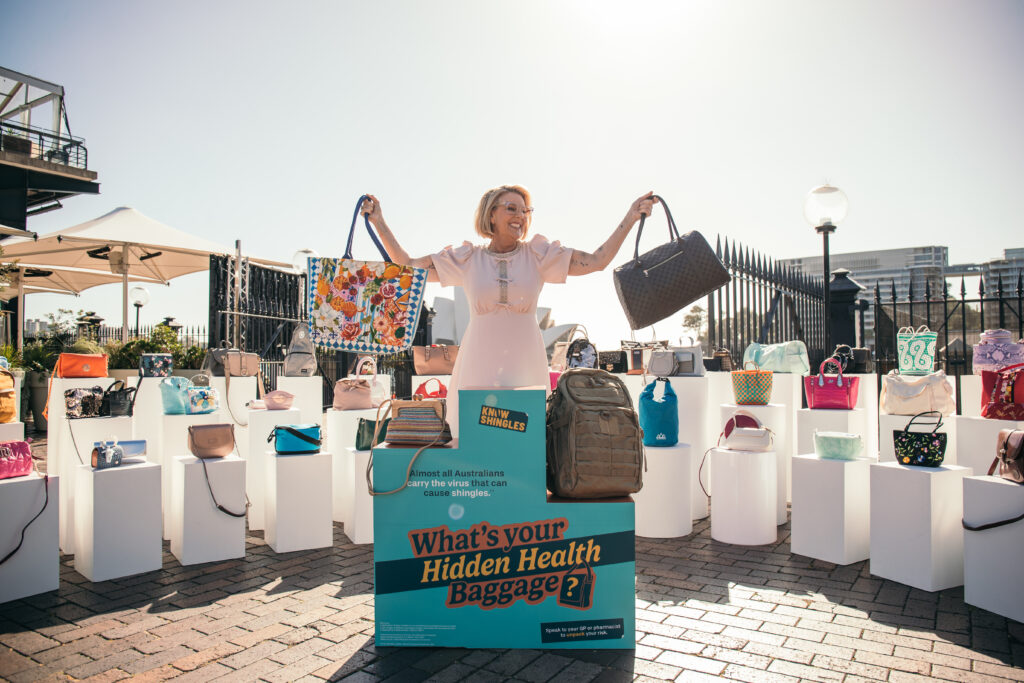
We took a similar approach at Palin Communications with the ‘What’s Your Hidden Health Baggage?’ shingles awareness campaign. Research showed that while many Australians understood the seriousness of shingles, they underestimated their own risk. Rather than simply communicating another health statistic, we brought it to life through a public installation of 97 bags at Sydney’s Circular Quay, representing the 97% of Australians over 40 already carrying the dormant virus that causes shingles.
Alongside the installation, Australian comedian Julia Morris shared her personal experience of shingles for the first time. The idea of carrying ‘hidden health baggage’ gave audiences a more tangible way to understand an otherwise invisible health risk, while Julia’s experience brought home the very real impact the disease can have on someone’s everyday life.
Earned-first creativity can look different
Creativity is often associated with the most visible parts of marketing: bold or immersive activations, large-scale outdoor executions designed to stop people in their tracks.
But there’s creativity in earned media too, it just shows up differently. It may be with a creative take on a revealing piece of data, a credible contradiction, an unexpected spokesperson or a new way to make an established issue relevant.
One example that comes to mind, is Pedigree’s pet obesity campaign, which took a fairly dry statistic about pet obesity and found the much better story hiding inside it: dogs may be conning their owners into feeding them twice.
It is fun and creative, feels true to dog owners but still backed by research and expert commentary. Creativity in earned media doesn’t always need a stunt. Often it is about spotting the ‘human truth’ and framing it in a way people actually want to talk about.
Sometimes, creativity is also about finding a way to get people talking about something they would rather not talk about at all. This was a challenge we had to overcome for our ‘More than once a night man’ campaign, which sought to raise awareness of enlarged prostates (benign prostatic hyperplasia) among Australian men. Palin Communications enlisted AFL personality Sam Newman to spend a day experiencing some of the more disruptive symptoms associated with the condition. In a video, Sam was prompted to find a toilet at inconvenient moments throughout his day, whether on the golf course, at work or at footy training, as well as repeatedly throughout the night. The campaign also featured pop-up urinals in Melbourne’s Federation Square.
Using a familiar personality and a touch of humour helped take some of the awkwardness out of a sensitive health conversation without trivialising the condition itself. It gave both journalists and Australian men a more approachable way into a conversation about urinary symptoms and the importance of seeking medical advice.
Attention is only the first step
For health awareness and patient advocacy campaigns, creativity should do more than make the work noticeable. It should make the issue easier to understand, discuss or act on.
It means understanding not only the science, but the human behaviours, anxieties, motivations and cultural context surrounding a health issue. It means asking not just “what do we need people to know?”, but “why would someone care enough to remember this?”
It means turning an abstract risk into an everyday behaviour, giving people language to describe an experience, challenging a misconception that prevents help-seeking or creating a clearer next step once attention has been earned.
Creative ideas need different conditions
Clients and agencies both have a role in creating the conditions for stronger work.
If brands want to create campaigns that genuinely stand out, there needs to be space for strategic creativity and thoughtful risk-taking within the boundaries of what is responsible and compliant.
That is particularly important as AI continues to reshape how information is created, surfaced and discovered. As content volumes increase, trusted and credible earned media is becoming even more valuable. This also means competitive advantage is achieved through creating something trustworthy enough to reference, relevant enough to share and distinctive enough to remember.
Health communications does not need to become reckless to be creative. But if health companies and brands want people to notice, understand and act, they need to become more comfortable with justified creative risk. Because no one remembers work that only ever feels safe.